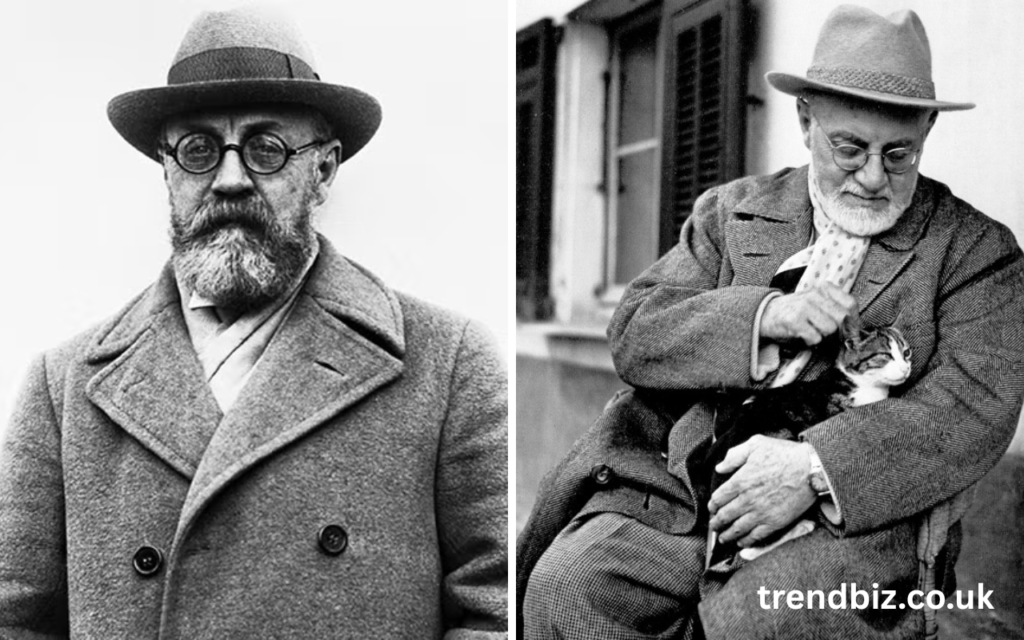
Henri Matisse is one of the most influential artists of the modern era, known for his bold use of color, expressive forms, and revolutionary approach to painting. When people search for “henri matisse portrait” or “henri matisse portrait photo,” they are usually looking for his famous portrait artworks and the unique visual style that defined his artistic career.
Matisse transformed modern art by breaking traditional rules of realism and focusing instead on emotion, color, and composition. His portraits are among the most studied and admired works in 20th-century art history.
This article explores his portrait style, famous works, artistic techniques, and why his portraits remain visually powerful today.
Quick Bio
| Detail | Information |
|---|---|
| Full Name | Henri Émile Benoît Matisse |
| Born | 1869 |
| Died | 1954 |
| Nationality | French |
| Profession | Painter, Sculptor, Artist |
| Art Style | Fauvism, Modern Art |
| Known For | Color-rich portraits and interiors |
Who Was Henri Matisse?
Henri Matisse was a leading figure in modern art who helped develop Fauvism, a style known for bold colors and expressive brushwork.
Unlike traditional portrait artists who focused on realistic detail, Matisse focused on:
- Emotion over accuracy
- Color over realism
- Composition over detail
- Expression over perfection
His portraits reflect this philosophy clearly.
What Is a Henri Matisse Portrait?
A Henri Matisse portrait is not just a realistic representation of a person. Instead, it is a creative interpretation that highlights mood, personality, and emotional tone.
Key features include:
- Strong, flat colors
- Simplified facial features
- Decorative backgrounds
- Bold outlines
- Abstract visual balance
These portraits often feel more emotional than realistic.
Henri Matisse Portrait Style
Matisse developed a unique artistic style that changed how portraits were created.
1. Use of Bold Color
He used vibrant and contrasting colors instead of natural skin tones.
2. Simplified Forms
Faces and bodies were often reduced to basic shapes.
3. Emotional Expression
The focus was on feeling rather than realism.
4. Decorative Composition
Backgrounds often included patterns, flowers, or abstract designs.
Famous Henri Matisse Portrait Works
Some of Matisse’s most famous portrait-related works include:
Woman with a Hat
A colorful portrait that shocked critics at the time for its bold colors.
Portrait of Madame Matisse
A series of works focusing on his wife with strong color contrasts.
The Green Stripe Portrait
A famous portrait of his wife using a vertical green line dividing the face.
These works helped define modern portrait art.
Henri Matisse Portrait Photo vs Painting
When people search for “henri matisse portrait photo,” they are usually comparing real photographs of people with his painted interpretations.
Photography
- Captures exact realism
- Shows true facial details
- Focuses on accuracy
Matisse Portraits
- Focus on artistic interpretation
- Use exaggerated colors
- Emphasize emotion over realism
Matisse’s portraits are not meant to copy photos but to reinterpret them creatively.
Influence of Fauvism on His Portraits
Fauvism greatly influenced Matisse’s portrait style.
Fauvism is characterized by:
- Wild and expressive colors
- Lack of realistic shading
- Emotional intensity
- Freedom in artistic expression
Matisse was one of the leaders of this movement.
Why Matisse Used Non-Realistic Colors
Matisse believed that color could express emotion better than realism.
For example:
- Blue could represent calmness or sadness
- Red could represent energy or intensity
- Green could create contrast or tension
He used colors as emotional tools rather than realistic representation.
Artistic Techniques in His Portraits
Matisse used several techniques:
Flat Perspective
He often avoided deep perspective and kept images visually flat.
Decorative Patterns
Backgrounds included flowers, textiles, and abstract designs.
Strong Outlines
He used dark lines to define shapes clearly.
Color Blocking
Large areas of single colors were used instead of shading.
Emotional Depth in His Portraits
Even though his portraits look simple, they carry deep emotional meaning.
They often reflect:
- Mood of the subject
- Relationship between artist and subject
- Inner emotional state
- Artistic imagination
This emotional depth is why his work is still studied today.
Legacy of Henri Matisse Portraits
Henri Matisse left a lasting impact on modern art.
His legacy includes:
- Inspiring abstract art movements
- Influencing modern design and illustration
- Changing how portraits are understood
- Promoting emotional expression in art
Many modern artists still draw inspiration from his techniques.
Why His Portraits Are Still Famous Today
Matisse’s portraits remain popular because:
- They are visually striking
- They are emotionally expressive
- They break traditional art rules
- They are easy to recognize
His work continues to appear in museums, textbooks, and exhibitions worldwide.
Modern Interpretation of Matisse Portrait Style
Today, designers and digital artists use Matisse’s style in:
- Graphic design
- Fashion prints
- Interior design
- Digital illustration
His influence is visible in modern visual culture.
READ MORE: Will Smith Glasses Meme: Origin, Meaning, and Pop Culture Impact
Conclusion
Henri Matisse revolutionized portrait art by moving away from realism and focusing on color, emotion, and composition. His portraits are not just images of people but expressive interpretations of mood and personality. Through works influenced by Fauvism, he changed how the world views art forever.
Henri Matisse remains one of the most important figures in modern art history, and his portrait style continues to inspire artists around the world.
This article is published for informational purposes on trendbiz.