Introduction
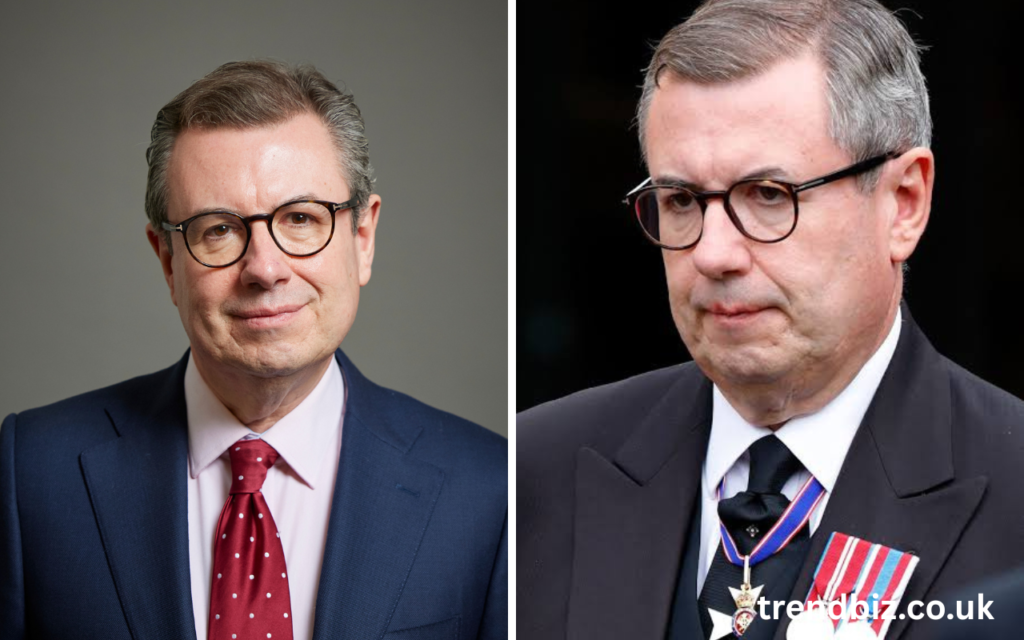
Sir Edward Young is a senior British courtier best known for his service as Private Secretary to Queen Elizabeth II and later King Charles III. He played one of the most influential behind-the-scenes roles in the modern British monarchy, advising the sovereign on constitutional matters, state affairs, and royal operations.
Because of his high-profile position within the Royal Household, many people search for “Sir Edward Young” to understand who he is, what he does, and how he contributed to the monarchy during a period of major transition.
This article explores his background, career journey, royal responsibilities, and legacy in detail.
Quick Bio
| Attribute | Details |
|---|---|
| Full Name | Edward Young |
| Title | Baron Young of Old Windsor |
| Date of Birth | 24 October 1966 |
| Nationality | British |
| Profession | Courtier, Civil Servant, Banker (former) |
| Known For | Private Secretary to Queen Elizabeth II |
| Royal Service | 2004–2023 |
| Highest Role | Private Secretary to the Sovereign |
| Education | Reading School |
| Political Status | Crossbench member of House of Lords |
Early Life and Education
Sir Edward Young was born on 24 October 1966 in the United Kingdom. He was educated at Reading School, a well-known grammar school in Berkshire.
From an early age, he showed academic ability and leadership potential. Unlike many public figures, his early life remained largely private, with little media attention until his later professional career in banking and government.
Early Career in Banking and Communications
Before joining the Royal Household, Edward Young built a strong professional background in finance and communications.
Barclays Bank Career
He worked at Barclays Bank from 1985 to 1997, where he held several roles including:
- International finance positions
- Corporate communications roles
- Deputy Head of Corporate Public Relations
This experience gave him strong skills in organizational management and strategic communication.
Political and Media Roles
After banking, he moved into political and media advisory roles:
- Advisor to Conservative Party leader William Hague
- Communications Head at Granada/ITV
- Experience in government and media strategy
These roles helped prepare him for senior responsibilities in public service.
Entry into the Royal Household
Sir Edward Young joined the Royal Household in 2004 as Assistant Private Secretary to Queen Elizabeth II.
This marked the beginning of a nearly two-decade-long royal career.
Early Royal Roles
His progression included:
- Assistant Private Secretary to the Queen (2004–2007)
- Deputy Private Secretary (2007–2017)
- Private Secretary to Queen Elizabeth II (2017–2022)
He later continued under King Charles III in a senior advisory capacity.
Role as Private Secretary to the Queen
The Private Secretary is the most senior official in the Royal Household.
Sir Edward Young’s responsibilities included:
- Advising the Queen on constitutional and political matters
- Coordinating communication between the monarchy and government
- Managing royal engagements and state affairs
- Overseeing senior household operations
He became one of the most trusted aides to Queen Elizabeth II during the final years of her reign.
Role During the Transition to King Charles III
One of Sir Edward Young’s most significant responsibilities came during the transition period following the Queen’s death in 2022.
He helped manage:
- Coordination of the royal succession
- Communication between government and monarchy
- Organizational continuity within the Royal Household
His role ensured stability during one of the most sensitive periods in modern British constitutional history.
Appointment to the House of Lords
After stepping down as Private Secretary in 2023, Edward Young was elevated to the peerage.
He became:
- Baron Young of Old Windsor
- A crossbench member of the House of Lords
This reflects the significance of his service to the Crown over nearly 20 years.
Honours and Recognition
Throughout his career, Sir Edward Young received multiple royal honours, including:
- Lieutenant of the Royal Victorian Order (LVO)
- Commander of the Royal Victorian Order (CVO)
- Knight Commander (KCVO)
- Knight Grand Cross (GCVO)
These honours recognize his long-term service and loyalty to the monarchy.
Personality and Working Style
Sir Edward Young is often described as:
- Highly discreet
- Extremely organized
- Politically neutral
- Loyal to the institution of the monarchy
His role required confidentiality, diplomacy, and careful management of sensitive issues.
Public Image and Media Representation
Although he is not a public-facing celebrity, Sir Edward Young has been portrayed in media and documentaries about the Royal Family.
He is sometimes referenced in discussions about:
- Royal household operations
- Modern monarchy structure
- Internal palace administration
His influence is significant even though he rarely appears publicly.
Career After the Royal Household
After leaving Buckingham Palace in 2023, he moved into advisory and leadership roles, including:
- Senior advisor roles in private financial institutions
- Global consulting and governance positions
- Membership in public service committees
This reflects his continued influence in governance and strategic leadership.
Legacy and Importance
Sir Edward Young’s legacy is tied to:
- Long service to Queen Elizabeth II
- Managing royal transition to King Charles III
- Strengthening modern Royal Household operations
- Supporting continuity of constitutional monarchy
His role was largely behind the scenes, but critically important to the functioning of the British monarchy.
READ MORE: Ronnie Bartlett Wife: Biography, Family Life, and Personal Details Explained
Conclusion
Sir Edward Young is one of the most important modern figures within the British Royal Household. From his early career in banking and politics to becoming Private Secretary to the Queen, his journey reflects decades of dedication to public service.
He played a central role in supporting Queen Elizabeth II during her final years and ensuring a smooth transition to King Charles III, making him a key figure in recent royal history.
As highlighted on TrendBiz, Sir Edward Young represents the quiet but powerful administrative leadership that keeps the British monarchy functioning smoothly behind the scene